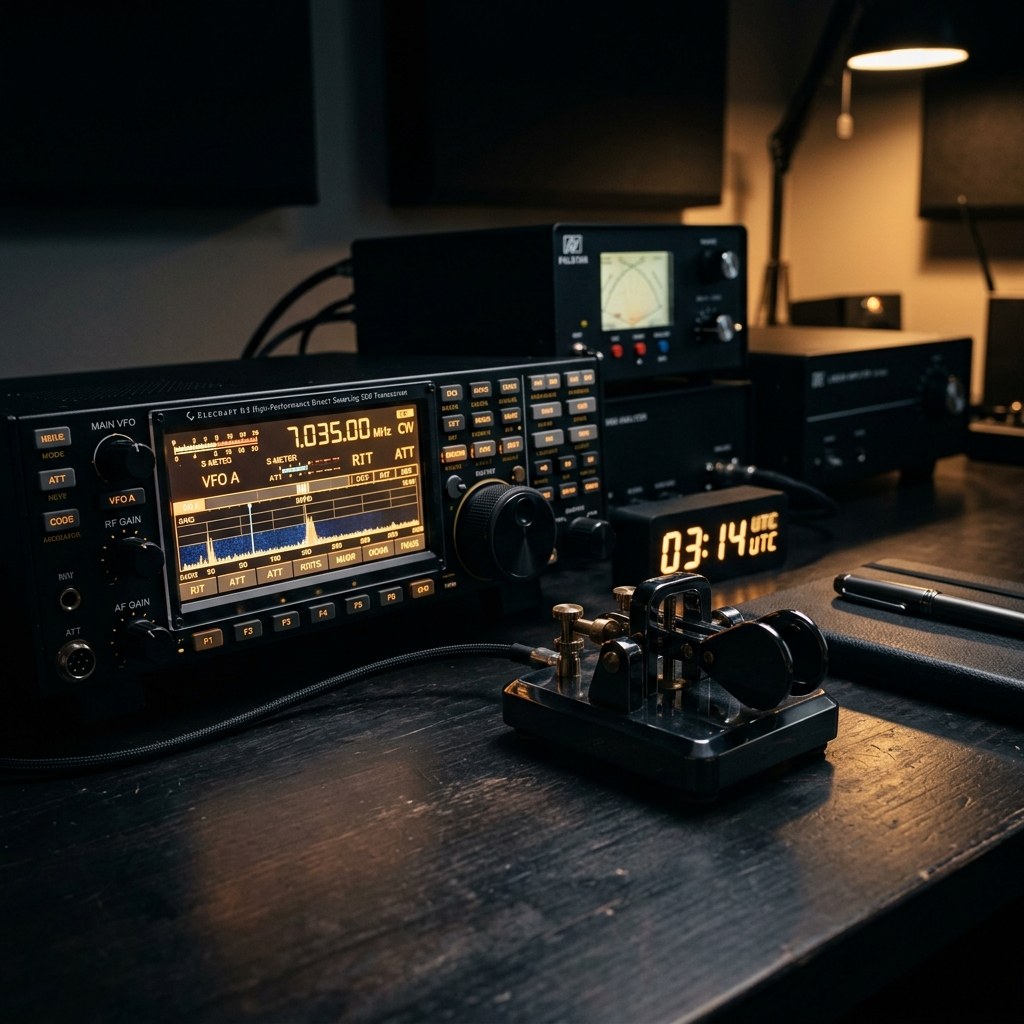
Every ham radio operator eventually encounters the Q-code alphabet — three-letter shorthand that compresses entire questions into efficient Morse groups. A first practice QSO often dumps QTH QRZ QSL in rapid succession while you search a cheat sheet. This MorseCoder reference covers the codes used in daily CW operation, organized by category with International Morse patterns, usage notes, and links to related procedural signals. Print it, bookmark it, and keep it beside the trainer.
History and Purpose of Q-Codes
Q-codes originated in the early twentieth century when international radiotelegraph services needed language-neutral abbreviations for common operational questions. The International Radiotelegraph Convention standardized the Q series, and amateur radio adopted them wholesale because CW bandwidth favors brevity.
Each Q-code consists of a statement or question. Many exist in paired forms: QRA means "My name is…" while QRA? asks "What is your name?" The question mark in print becomes a question when sent on air. The Wikipedia Q-code article documents the full international list; this guide focuses on codes active in contemporary amateur radio.
Q-codes complement but do not replace prosigns like AR (.- .-.) and SK (... -.-.). Use Q-codes for operational vocabulary; use prosigns for transmission structure. Both appear constantly in nets and casual QSOs.
Essential Daily Operating Q-Codes
Learn these first. They appear in virtually every CW contact on HF bands.
- QRL? — --.- .-. .-.. — Is the frequency busy?
- QRM — --.- .-. -- — Interference from other stations
- QRN — --.- .-. -. — Static and natural interference
- QRO — --.- .-. --- — Shall I increase power?
- QRP — --.- .-. .--. — Shall I decrease power? / Low power operation
- QRQ — --.- .-. --.- — Send faster
- QRS — --.- .-. ... — Send slower
- QRZ? — --.- .-. --.. — Who is calling me?
- QSB — --.- ... -... — Signal fading
- QSL — --.- ... .-.. — I acknowledge receipt / confirmation card
- QSO — --.- ... --- — A contact / conversation
- QSY — --.- ... -.-- — Change frequency
- QTH — --.- - .... — Location / station location
- QRT — --.- .-. - — Stop sending / closing station
- QRX — --.- .-. -..- — Stand by / wait
Extended reference with usage examples lives on our Q-Codes page. Practice sending QTH and QSL until they flow without conscious letter assembly.
Signal Quality and Readability
- QRK — --.- .-. -.- — Signal readability (1-5 scale)
- QSA — --.- ... .- — Signal strength (1-5 scale)
- QSB — --.- ... -... — Fading signal (strength varies)
- QSD — --.- ... -.. — Keying is defective
- QSK — --.- ... -.- — Can you break in? / Full break-in
- QRKK — --.- .-. -.- -.- — Signal is readable (informal emphasis)
Signal reports combine QSA and QRK: "QSA 5 QRK 5" means strong and perfectly readable. Contest operators abbreviate further, but beginners should send complete reports.
Station Identity and Administration
- QRA — --.- .-. .- — Name of station
- QRG — --.- .-. --. — Exact frequency
- QRI — --.- .-. .. — Tone of transmission
- QRN — --.- .-. -. — Static (natural noise)
- QRO? — --.- .-. --- — Shall I increase power?
- QRP? — --.- .-. .--. — Shall I decrease power?
- QRT? — --.- .-. - — Shall I stop sending?
- QRV? — --.- .-. ...- — Are you ready?
- QRZ? — --.- .-. --.. — Who is calling me?
- QSL? — --.- ... .-.. — Can you acknowledge receipt?
- QSL via — Confirmation through bureau or direct mail
- QTC — --.- - -.-. — Message traffic count
- QTH? — --.- - .... — What is your location?
- QRA? — --.- .-. .- — What is your station name?
Technical and Equipment Q-Codes
- QRM — --.- .-. -- — Man-made interference
- QRN — --.- .-. -. — Natural interference (static)
- QRO — --.- .-. --- — High power / increase power
- QRP — --.- .-. .--. — Low power operation (5 watts or less tradition)
- QRQ — --.- .-. --.- — Send faster
- QRS — --.- .-. ... — Send slower
- QSD — --.- ... -.. — Your keying is bad
- QSP — --.- ... .--. — Relay message to…
- QSX — --.- ... -..- — Listen on… kHz
- QSY — --.- ... -.-- — Change to another frequency
- QSK — --.- ... -.- — Full break-in operation
- QSL — --.- ... .-.. — Acknowledge / confirmation
- QSN — --.- ... -. — Heard you at… (signal report)
- QSP — --.- ... .--. — Will you relay to…?
Net Operation and Traffic Handling
- QNC — --.- -. -.-. — All stations copy?
- QND — --.- -. -.. — Net is directed (controlled)
- QNE — --.- -. . — Entire net stand by
- QNF — --.- -. ..-. — Net free (uncontrolled)
- QNG — --.- -. --. — You are QRV to net control?
- QNH — --.- -. .... — Altitude QFE reference (aviation crossover)
- QNI — --.- -. .. — Net stations check in
- QNJ — --.- -. .--- — Join net formally
- QRL? — --.- .-. .-.. — Is frequency in use?
- QRM — --.- .-. -- — Interference present
- QRU? — --.- .-. ..- — Anything for me?
- QRX — --.- .-. -..- — Stand by please
- QRY — --.- .-. -.-- — What is my turn?
- QRZ? — --.- .-. --.. — Who is calling?
Complete Q-Code Reference Table
Additional codes encountered less frequently but worth knowing for DX and contest operation:
- QAP — --.- .- .--. — Wait for me to call you
- QRD — --.- .-. -.. — Duration of contact report
- QRM — --.- .-. -- — Interference
- QRN — --.- .-. -. — Atmospheric noise
- QRO — --.- .-. --- — High power
- QRP — --.- .-. .--. — Low power
- QRQ — --.- .-. --.- — Faster
- QRS — --.- .-. ... — Slower
- QRT — --.- .-. - — Closing down
- QRU — --.- .-. ..- — Nothing for you
- QRV — --.- .-. ...- — Ready
- QRZ — --.- .-. --.. — Who calls?
- QSA — --.- ... .- — Strength
- QSB — --.- ... -... — Fading
- QSD — --.- ... -.. — Bad keying
- QSK — --.- ... -.- — Break-in
- QSL — --.- ... .-.. — Confirm
- QSM — --.- ... -- — Repeat message
- QSN — --.- ... -. — Heard at
- QSO — --.- ... --- — Contact
- QSP — --.- ... .--. — Relay
- QST — --.- ... - — General call to all amateurs
- QSX — --.- ... -..- — Listen on
- QSY — --.- ... -.-- — Change frequency
- QTH — --.- - .... — Location
- QTR — --.- - .-. — Time
Q-Codes vs. Common Abbreviations
CW operators combine Q-codes with standard abbreviations. Know both systems:
- 73 — --... ...-- — Best regards
- 88 — ---.. ---.. — Love and kisses
- CQ — -.-. --.- — Calling any station
- DX — -..-.. — Long distance
- ES — . ... — And
- FB — ..-. -... — Fine business (excellent)
- HI — .... .. — Laughter
- HW — .... .-- — How
- K — -.- — Go ahead (invitation to transmit)
- KN — -.- -. — Go ahead, named station only
- OM — --- -- — Old man (fellow operator)
- OP — --- .--. — Operator
- R — .-. — Received / Roger
- TNX — - -. -..- — Thanks
- WX — .-- -..- — Weather
- XYL — -..- -.-- .-.. — Wife (ex-young lady)
- YL — -.-- .-.. — Young lady
Sample QSO Using Q-Codes
A typical casual contact might flow like this (paraphrased with Q-code emphasis):
- Station A: CQ CQ CQ DE MORSECODER MORSECODER K
- Station B: MORSECODER DE STATION B STATION B KN
- Station A: STATION B FB DR OM UR QRK 5 QSA 5 HW CPI? K
- Station B: MORSECODER QTH IS PRACTICE LAB QSL? K
- Station A: QSL QTH PRACTICE LAB ES WX IS SUNNY 72F TNX QSO 73 MORSECODER SK
Practice this pattern in the QSO Simulator module of our Morse code trainer before your first live contact.
Prosigns That Pair With Q-Codes
Every QSO ends with procedural signals. Master these alongside Q-codes on our prosigns reference:
- AR (.- .-.) — End of message
- SK (... -.-. ) — End of contact (silent key)
- BK (-... -.- ) — Break / back to you
- KN (-.- -.) — Named station only
- AS (.- ... ) — Wait / stand by
Learning Strategy for Q-Codes
- Memorize QTH, QSL, QSO, QRZ, QRM, QRN, QSB, QRT, QRX in week one
- Add QRL, QRS, QRQ, QRO, QRP, QSY in week two
- Practice in QSO Simulator until sending feels automatic
- Log real contacts and note unfamiliar Q-codes for study
- Print this cheat sheet for your operating desk
Combine Q-code study with broader ham preparation in our Ham Radio Morse Code guide. Verify any code's Morse pattern instantly with the translator.
Q-codes look intimidating until you realize the same fifteen recur constantly. Learn those fifteen and you will understand the majority of every CW conversation on the bands. See you on the air — QSL?